It was here all along...
Chapter 13 – The Floor That Wasn’t There
It’s hard to be rational in a building that can’t count.
You found the missing chapter!
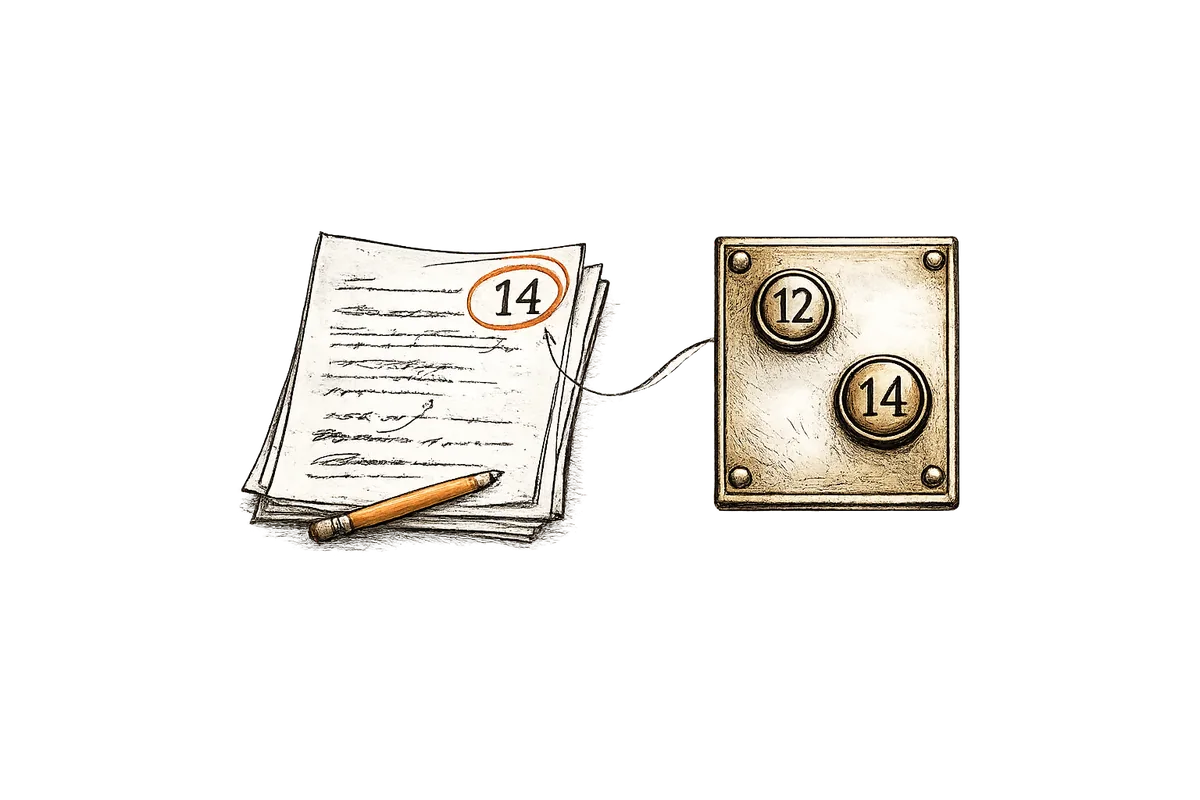
In one of my recent missions to scan and archive the artefacts from the numerous boxes of my life’s memorabilia into the machine, I came across an essay I’d written in high school.
The essay was still held together in a plastic sleeve that was yellowing with age. At the time, and up until the day I discovered it again recently, I thought the essay was about a whistle. A reasonable mistake. A girl in my class had put her hand over my mouth next to a school car park, told me what would happen if I carried on whistling, and changed a small part of my behaviour for the next thirty years. There was dialogue. There was research. There was a conclusion about South Africa. All the machinery of a decent school essay was present and accounted for. Across the top, in my best serious handwriting was the title and the date for the assignment ‘An incident that changed the way I look at something ordinary’. The title underneath was double-underlined.
NOT AFTER DARK
The first thing I clocked was the mark I’d been awarded: 16/20. Thirty years on, vanity remains alert. At the bottom of the final page, Mrs Warrington had written in careful block capitals:
4 pages
A genuine and thoughtful piece, and your ear for dialogue is improving. You lose control of your sentences in the second half and there are a few places where you tell me what you think instead of showing me. Please indicate your library sources next time.
She was right about the sentences. The interesting thing, rereading it now, is what she could not have corrected. It’s difficult to put a red line through something the writer doesn’t yet know is there. Elsie and her bricks got one sentence.
At home, my nanny Elsie has bricks under the legs of her bed, and I always assumed it was for the damp.
Then I moved on to reading the rest of my schoolgirl essay, how I’d described in my youthful words the way the Joburg winter sky used to go from orange to nothing in about four minutes. By five o’clock the cold was coming up off the tar behind the hockey fields like it had a personal grievance. We stood next to the car park off Princess of Wales Terrace in blazers over our hockey skirts, our legs turning a Highveld purple, waiting for lifts. Somebody’s mom was late. Somebody’s dad was permanently late. I had a chocolate Steri Stumpie going warm in my blazer pocket and was bored out of my skull. So I whistled. Not even a tune I chose. It was the penny-whistle line from Mango Groove’s Special Star, a song that rather invites whistling.
Two bars. Maybe three. Suddenly, there was a hand over my mouth. Cold fingers, pressed hard enough that I could feel my own teeth through the inside of my cheek. I went backwards into the tea table with the bran muffins and made what the essay calls “an undignified squeal”. It was Thandi, who sat two rows in front of me in History and had never once been the girl anybody needed to worry about. “Don’t,” she said. “Not after dark.”
“It’s Mango Groove,” I said. I still admire this defence. It had absolutely nothing to do with the charge, but I delivered it as though the ownership of the song settled the matter.
“I don’t care whose it is.” She was a boarder, which explains the torch in her blazer pocket but not the certainty. She said the word tokoloshe the way you would say the name of somebody’s auntie. In the version her family kept, whistling after sunset called it. That was the rule. There was no clause about intention and no discount for being sixteen, bored and next to a car park in Parktown. Her grandmother was from Nongoma. Her uncle had walked home one night in the seventies, whistling because he was in a good mood, and when he reached the door the envelope containing his month’s wages was gone from a pocket that was still buttoned.
Nobody in that family had whistled after dark since. Not in the country. Not on a farm. Not in a flat in Yeoville with the windows shut and the kettle on. She also told me it did not only take things. Then she stopped, so I stopped. Mrs Warrington had told us to include research where possible. Ante-Matric me took this as an instruction from the state.
I went to the school library at the next break-time to do my best investigative work. In the essay I announce this proudly, twice.
“During my library visit to do research during break-time…”
The second time I have crossed out, apparently deciding I’d already made my point.
During said research, I discovered the story of the penny whistle on Johannesburg street corners in the 1950s. Boys running dice games kept whistles in their pockets. When the police van appeared, the coins disappeared and the whistles came out, so that by the time the police arrived the gambling corner had become a band. The van was the kwela-kwela. The music became kwela. At least, that was the account available to a schoolgirl in a library in 1996. I wrote it down with the confidence of a person who had found one book. The whistle, I decided, had form. It had spent a good part of its South African life announcing that something was coming, and the something had hardly ever been good. This pleased me enormously because it made the essay work.
Every Sunday night that year my parents watched the Truth and Reconciliation Commission on television. People stood up and said aloud the things that had been known in one room and unknown in the next.
I wrote:
“I am not comparing myself to that…”
Then I made the comparison anyway. Sixteen. The schoolgirl who wrote the essay believed she had discovered that people living in the same country could carry entirely different worlds inside them. She had found the split country all right. She had simply placed it two rows ahead in History and nowhere near the bottom of her own garden.
 At the bottom of our garden was a room. In the room was a bed. The bed stood on four bricks, one beneath each leg. The woman who lived there had been putting food in front of me since I was small enough to need it cut up. I had sat on that bed for years, wrapped in the smell of her cooking and her patience while I jabbered on about who knows what.
I could tell you the parts of a paramecium, the causes of the Great Trek and every word of Special Star. But I had never asked why the bed was raised. It had not occurred to me that anything in her room might be a fact about the world. I thought it was a fact about her. Even now I need to be careful about what I claim to understand. Beds have been raised for damp, for storage, for airflow and for reasons connected to beliefs about what moves close to the floor at night. I did not know why hers was on bricks because I did not ask her.
The sentence is there, unremarked, and then the girl moves on to her conclusion. There is no version of this in which I come out especially well, so let’s leave it there. What I did do, with the full moral seriousness of a sixteen-year-old, was stop whistling.
I stopped in the car. I stopped in the passage on the way to the bathroom. Sunset moved across the winter and I moved with it, a small woman with a large superstition and no theology to hang it on whatsoever.
My mother thought I had gone soft in the head. She was not entirely wrong. This was simply not the evidence. I did not come to believe what Thandi believed. I did not imagine a creature crouched outside the bathroom window waiting for me to get careless with a melody. I acquired the rule without acquiring the explanation.
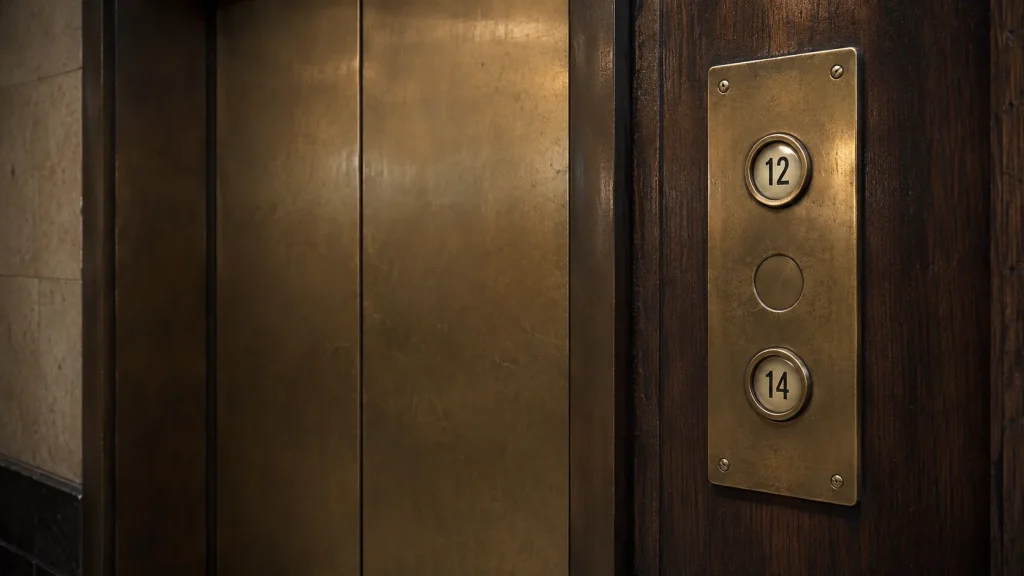
This is how a floor disappears. You walk into a lift and the buttons read:
10
11
12
14
Nobody believes the concrete slab between twelve and fourteen has dissolved. It remains exactly where the engineers left it, full of desks, plug points, fire extinguishers and somebody microwaving fish in a communal kitchen. The floor is present. The number has been asked to leave. An architect drew it. Engineers calculated its load. Contractors poured it. Inspectors signed it off. An insurer assigned a risk to it. Then, somewhere in this long procession of adult competence, somebody decided the building should pretend thirteen had not occurred. This isn’t a small cottage in the woods with charms above the door. It is a commercial property with access control and an emergency evacuation plan. The building knows how to count. It also knows people.
So here’s why this chapter is hidden. Most of this book has made a respectable case for the human being. Trust. Judgement. Taste. Courage. Good words. Employable words. Words you can put on a conference slide without anybody shifting in their seat. Then the lucky jerseys arrive. We are also the animal that says, “I know it makes no sense,” and changes seats anyway. Half this country watched the 2023 World Cup final in a lucky Springbok jersey that had not been washed since the quarters, on the grounds that the magic only works if you never say it out loud. We tell people not to tempt fate, as though fate has been reading quietly in another room and might not have noticed us otherwise.
Some feelings arrive before their reasons. Anyone who has done the same work for long enough knows this. Something is off with the patient. Something is wrong in the figures. The person in front of you is saying all the right things and you want, very badly, not to employ them. You cannot yet explain it. Later, sometimes, the explanation catches up. We call the useful version instinct. We call it judgement. We call it taste. Taste is not magic. It is pattern recognition with a private apprenticeship behind it. You have seen that colour die in print. You have watched that sentence empty a room. You have trusted that charming person before and spent six months discovering what the charm was doing there. The body gets there first. Superstition knocks on the same door. It prefers wood. It also says, Something is wrong. The difference is the apprenticeship. One frightening story, repeated until it has worn a path. A warning from a grandmother. An uncle’s missing wages. One terrible shift after somebody used the wrong word. Same knock. Different evidence. Intelligence doesn’t cure it.
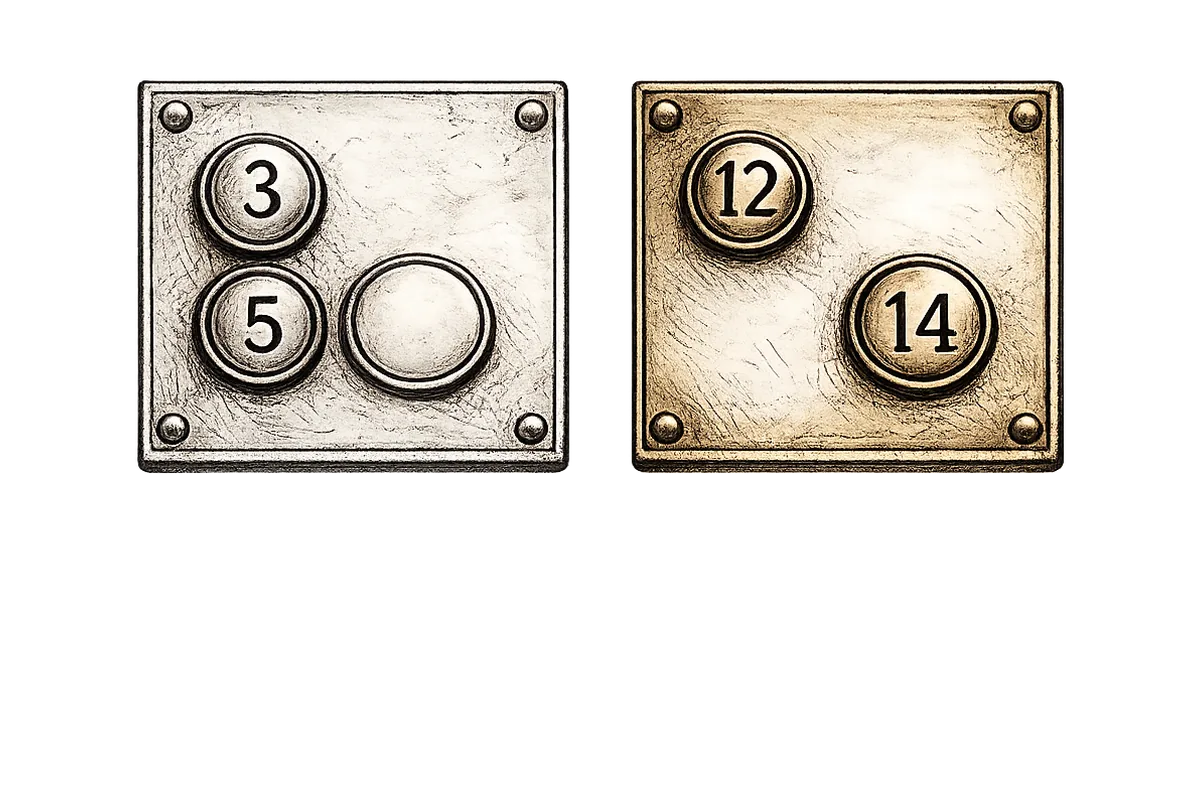 The rational person and the superstitious person are not always two people. Quite often they are sharing a bathroom. The building has been designed by people who can calculate wind load and fire resistance. It still jumps from twelve to fourteen.
Imagination comes with the possibility that it will find a pattern where there is none, memory comes with its own peculiar editing, and meaning arrives with a habit of making too much of itself. None of this is an argument that superstition is lovely. It can be vicious. It turns illness into guilt and misfortune into accusation, and it has talked people out of treatment because somebody decided the suffering must have been sent. Fear likes an explanation, and it is not fussy about who gets hurt by it.
An interior life is not the same thing as a good one. It is simply an interior. A machine can learn the rule. It can omit ‘thirteen’ from the lift panel because the building’s owners have learnt that people prefer it. It can recognise that hospital staff respond badly when the word quiet is uttered, as though its mere mention will cause the emergency room to start filling up moments later. It can catalogue every account of the tokoloshe, compare the variations and explain why a raised bed appears in some of them. It can also learn our superstitions too well and repeat them back as patterns, prejudices and correlations. What it cannot do is inherit one by accident. It cannot be sixteen in a hockey skirt with a warm Steri Stumpie in its pocket. It cannot feel somebody else’s cold fingers against its mouth. It cannot stop whistling for thirty years while maintaining that it does not believe. It cannot find an old essay and discover that the most important sentence was the one its younger self wrote down without noticing its significance.
 I live at the other end of the country now. The dark comes in off the sea instead of off the veld. Sometimes I take the recycling out after sunset. I cross the garden with a bag of bottles, knowing what a whistle is, where the warning came from and how thoroughly the whole thing fails the test of reason. I have no argument for it, and I’m not going to build one.
I still don’t whistle. Touch wood.
In this chapter: Mrs Warrington and Thandi are pseudonyms.
That was Chapter Thirteen
It was never in the book, but it was here all along. You found it because you were paying attention :)